Snug as a Squirrel
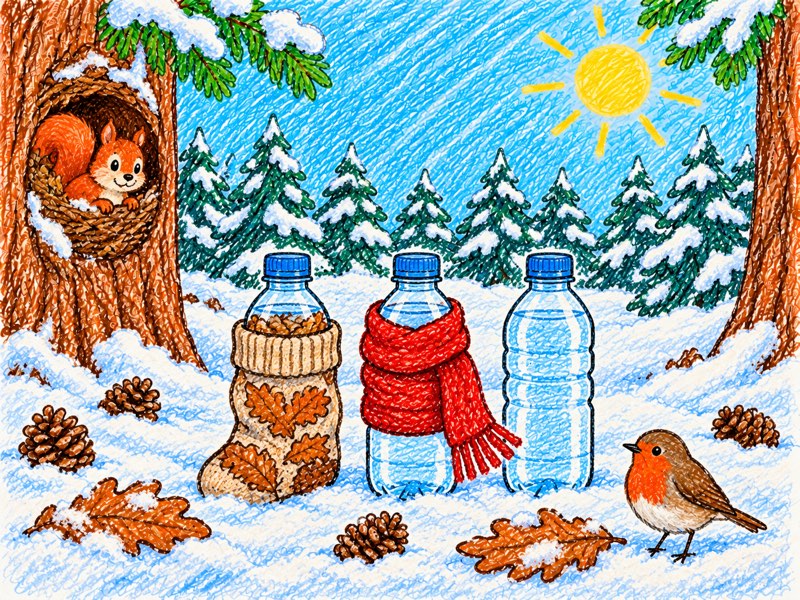
Three little bottles, two cozy wraps… which will slow the cooling?
Brrr! Imagine you’re a little red squirrel on a chilly woodland morning.
The branches rustle. Your bushy tail twitches. Back in your nest, there’s a soft lining of leaves and other cozy materials.
A squirrel’s nest is called a drey. It’s a little place to shelter between woodland adventures.
But what makes a wrap cozy?
Today, you’re going to become a woodland warmth detective! With your grown-up adventure buddy, you’ll give two little bottles different wraps and leave another unwrapped.
Let’s discover what happens to the warm water inside!
What you’ll need
- Three small bottles with lids
- Comfortably warm water, prepared and poured by your grown-up
- A measuring jug
- A roomy fabric pouch (a pillowcase could work) and some dry fallen leaves
- A woolly scarf or piece of wool fabric
- A digital kitchen thermometer suitable for measuring water
- A tray
- A watch or timer
- Paper and a pencil
- Your grown-up adventure buddy
- Warm outdoor clothes if you’re testing outside
Use warm water, never hot or boiling. Your grown-up handles the filling and temperature checks.
Your mission
-
Step 1: Choose your little testing spot
Find a flat, dry, sheltered spot with your grown-up.
You could use an outdoor table on a cool day or a table indoors. Choose somewhere away from direct sunshine and heaters.
All three bottles will sit together on the same tray.
Explorer question: Why might it be tricky to compare them if one sat in sunshine and another sat in shade?
-
Step 2: Give your bottles the same start
Ask your grown-up to prepare one jug of comfortably warm water.
They can measure the same amount into each bottle, leaving enough room to close the lids.
Your grown-up should check and record each starting temperature, then close the lids securely. Aim for the same starting temperature in all three.
Draw your bottles on your paper and label them leaves, wool and no wrap.
Explorer question: Why are we giving each bottle the same amount of water?
-
Step 3: Make two cozy wraps
Place the first closed bottle in the fabric pouch. Gently tuck dry fallen leaves around its sides and underneath it.
Wrap the second bottle in your woolly material, covering its sides and base.
Leave the third bottle unwrapped.
Explorer question: Which wrap do you predict will slow the cooling most? What makes you think so?
-
Step 4: Wait and wonder
Place all three bottles on the tray in your testing spot.
Set a timer for about 20 minutes. Leave the bottles together and avoid moving or holding them while you wait.
You can try your mindful moment somewhere comfortable nearby.
If you’re outside and feel cold, head indoors with your grown-up. You don’t need to stay outside for the experiment to work!
Explorer question: What could we draw to help us remember our prediction?
-
Step 5: Check your warmth clues
When the timer finishes, ask your grown-up to measure the water temperature in each bottle.
They should check all three promptly, using the same thermometer and method, following its instructions.
Write each result beside your drawing.
Which water cooled the most? Which cooled the least? Your grown-up can help compare each final reading with its starting temperature.
Perhaps two results are very similar. That’s a discovery too!
Explorer question: Did your results match your prediction?
-
Step 6: Discover the cozy secret
The water started warmer than its surroundings, so it gradually lost heat.
Some materials can slow that heat loss. We call this insulation.
Dry leaves and woolly materials can hold little pockets of air. Still air helps slow the movement of heat.
The wraps don’t make heat of their own. They can help the warmth already inside escape more slowly.
Little woodland secret: Red squirrels line their dreys with soft materials such as leaves, moss and grass. They don’t hibernate, although they may spend more time sheltering in cold weather.
Explorer question: Where can you spot insulation in something you wear?
-
Step 7: Pack away your cozy lab
Ask your grown-up to empty and clean the bottles and thermometer.
Put away your scarf and pouch. Return untreated fallen leaves near where you collected them, without disturbing plants or animal homes.
Wash your hands after handling the leaves.
Would you like to try again another day? Change one thing, such as the thickness of a wrap, and see what happens.
Little explorer reminder: There doesn’t have to be a clear winner. Careful noticing is what makes you a warmth detective!
Adventure from indoors
Too chilly to explore outside?
Your cozy little lab can stay indoors!
Use the same equipment and follow the mission steps at a table. Keep all three bottles together, away from heaters and sunny windows.
No dry leaves available? Try a dry cotton cloth as one wrap and woolly fabric as the other. Record which materials you used.
Here’s what to remember
- Use matching bottles.
- Start with equal amounts of water at similar temperatures.
- Leave one bottle unwrapped.
- Test them in the same place for the same amount of time.
- Ask your grown-up to measure and record the temperatures.
Explorer question: What would you keep the same if you repeated your experiment tomorrow?
You might notice only a small difference. Record what happened rather than what you hoped would happen!
Your mindful moment
Your little squirrel has a sheltered place to pause.
Now it’s your turn.
Find somewhere warm and comfortable with your grown-up.
Keep your cozy clothes on. If you like, tuck a blanket around your lap.
Take a gentle breath in… and slowly breathe out.
Notice where the fabric touches you.
Does it feel soft? Smooth? A little fluffy?
Imagine you’re a tiny squirrel resting in a snug woodland drey.
Outside, the branches sway.
Inside, you have a quiet place to settle.
Let your shoulders soften.
Rest your hands somewhere comfortable.
Take another gentle breath.
There’s nothing you need to test or work out for a moment.
Just a little pause, tucked into your day.
Take the calm home
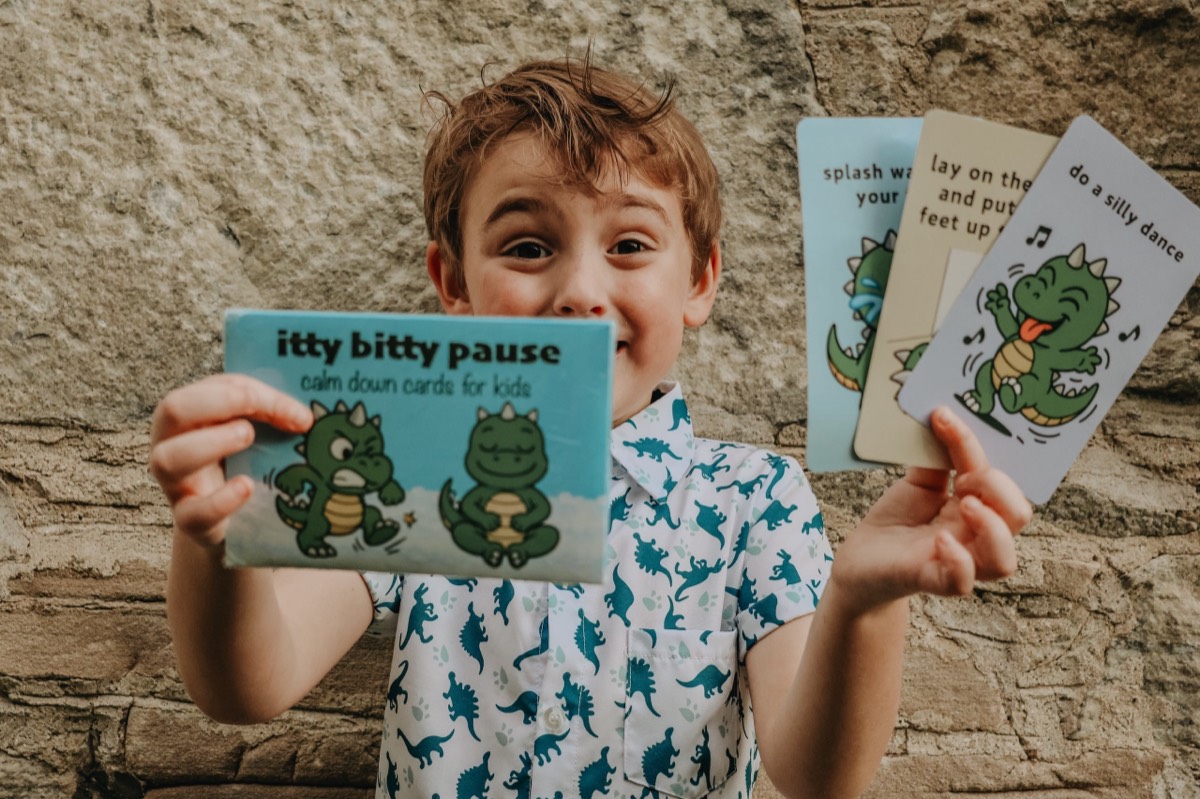
Loved this mindful moment? Our itty bitty pause card decks hold 25 more little ways to breathe, move and reset, ready for bedtime, the car or the next big feeling.
Meet the calm cards