Fox Walk & Owl Eyes
Psst… little explorer! Shall we borrow a few woodland tricks?
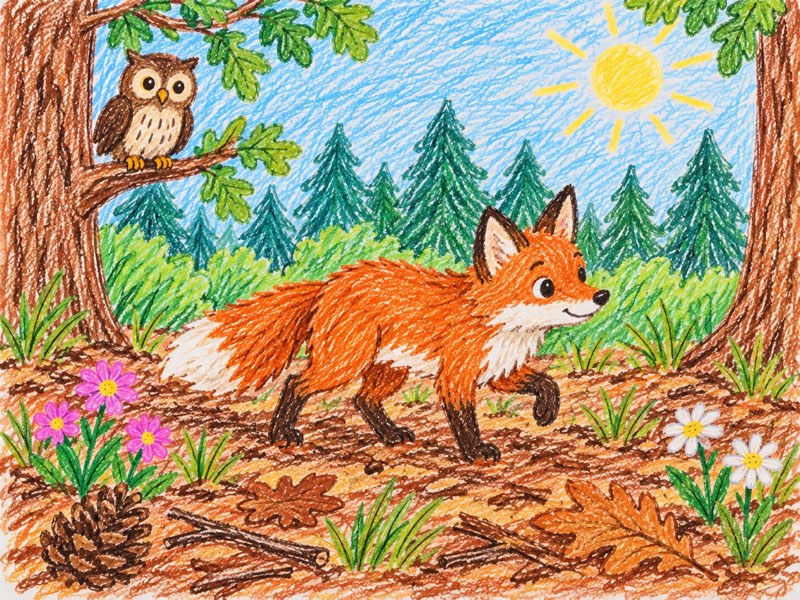
Imagine a fox placing its paws carefully between the leaves.
Then picture an owl sitting on a branch, watching for the smallest movement.
What might you notice if you slowed your steps and widened your view?
Today, you and your grown-up are going to try two ways of exploring: careful fox feet and watchful owl eyes.
There’s no need to sneak up on an animal. Our adventure is all about noticing the woodland while leaving its creatures happily undisturbed.
Ready? Let’s find our paws!
What you’ll need
- Comfortable shoes that fit securely
- A clear, even patch of ground in a familiar garden, park or woodland
- Your grown-up adventure buddy
- Your curious eyes and careful feet!
Little tip: Start somewhere easy to walk, away from roots, slippery ground and prickly plants. You can try the noticing parts while sitting down, too.
Your mission
-
Step 1: Find your woodland practice patch
Every fox needs somewhere safe to practise its footsteps!
Choose a small, familiar space with your grown-up. Look for even ground with enough room to take a few slow steps.
Check the ground together. Are there loose stones, holes or branches in the way? Choose a clearer spot if you need to.
Stand comfortably and let your knees soften a little. Keep your eyes open and look where you’re going.
Explorer question: What do you think might make a footstep noisy? Your shoes, the ground or the way you move?
-
Step 2: Meet your fox feet
Let’s try one careful step.
Slowly place the outside edge of one foot on the ground. Gently roll the rest of your foot down until it rests flat. Then gradually move your weight onto that foot.
Try the same thing with your other foot.
Small steps are a good place to start. Your grown-up can practise beside you while you work it out together.
If the movement feels awkward, use your own comfortable, slow steps instead. This isn’t a test of having perfect fox feet!
Little bushcraft secret: Moving slowly gives you time to notice where you’re placing your feet. Wildlife watchers use careful movement to make less disturbance around them.
Explorer question: What changes when you put your foot down slowly instead of taking your usual step?
-
Step 3: Follow the fox’s path
Choose a nearby finishing point with your grown-up. Perhaps it’s a tree, a bench or the edge of your practice patch.
Take five to ten small, careful steps towards it, keeping your eyes on the way ahead and the ground you’re crossing.
Listen as you go.
A soft pat? A little crunch? A swish through the grass?
You don’t need to move without a sound. If a twig snaps or a leaf crackles, you’ve discovered something about the ground beneath you.
Try walking back at your everyday pace. Does it sound or feel different?
Explorer question: Which part of your practice patch made the softest sound? Which made the loudest?
-
Step 4: Settle onto your owl perch
Now let’s give those fox feet a rest.
Stop somewhere steady, or sit comfortably beside your grown-up. Owl eyes are for staying in one place—we’ll use our usual looking-around eyes whenever we walk.
Choose one spot straight ahead. It might be a mark on a tree or a leaf on a branch.
Let your gaze rest there gently. You don’t need to stare, and you can blink whenever you like.
Hold both hands in front of you and wiggle your fingers. Slowly move your hands apart towards your sides.
Without turning your head or looking directly at your hands, notice how far they can go before your wiggling fingers disappear from view.
Then bring your hands down and relax.
Little bushcraft secret: You can see some things beside you while looking ahead. This is called peripheral vision. Our “owl eyes” game helps us explore that wider view.
Explorer question: Could you notice your fingers even when you weren’t looking straight at them?
-
Step 5: Watch for a woodland wiggle
Let’s try that wider view again.
Stay sitting or standing still. Rest your gaze on your chosen spot and notice what happens around its edges.
Perhaps you spot:
- A leaf fluttering beside a trunk
- Grass bending in the breeze
- A shadow shifting across the ground
- A bird passing through your view
- Your grown-up giving a small wave
Try it for a few moments, then let your eyes move freely again.
Nothing moving? That’s okay. Your grown-up can slowly wiggle their fingers out to one side while staying where you can comfortably notice them.
Stop whenever your eyes feel tired or uncomfortable.
Explorer question: What caught your attention first? Was it a movement, a colour or a change in the light?
-
Step 6: Put your woodland skills together
Time for a little fox-and-owl adventure!
With your grown-up, choose another nearby stopping place within your safe practice patch.
First, take a few careful fox steps. Look where you’re going.
Then stop, settle and try your owl eyes.
Let your gaze move normally again before you start walking.
You can repeat this a few times:
- Fox feet to move.
- Owl eyes to pause.
- Curious eyes to look around.
There’s no need to hurry. You might discover that the same small patch has plenty to notice.
Little bushcraft secret: Pausing gives us time to notice things we might miss while moving. Exploring can be a mixture of walking, watching and waiting.
Explorer question: Did you notice something when you stopped that you hadn’t spotted while walking?
-
Step 7: Share your woodland story
Find somewhere comfortable with your grown-up and think back over your adventure.
Can you remember:
- A sound your footsteps made?
- Something you felt beneath your feet?
- A movement you noticed with your owl eyes?
Tell your story, draw a picture or show your grown-up your favourite part.
Perhaps your fox crossed a crunchy leaf patch. Perhaps your owl spotted one tiny branch dancing in the breeze.
Before you leave, take a final look around. Leave the woodland just as you found it, with plenty of space for the creatures who live there.
Little explorer reminder: Some days you’ll feel like creeping slowly. Other days you might prefer to sit and watch. You can choose the parts that work for you—and you don’t need to spot an animal to have an adventure.
Adventure from indoors
No woodland nearby today?
Our fox feet and owl eyes can practise at home!
Ask your grown-up to help you choose a clear room with enough space to move safely.
Here’s what to do
- Clear your fox path. Move toys and other obstacles aside. Avoid slippery floors and loose rugs, and wear something secure on your feet.
- Choose your stopping places. Pick two nearby points, such as a chair and a doorway. Check the route with your grown-up.
- Try your everyday footsteps. Walk across once at your usual pace. What can you hear?
- Try your careful footsteps. Walk back slowly with small fox steps. Keep looking where you’re going. What feels different?
- Find your owl perch. Sit or stand still somewhere comfortable. Rest your gaze on one spot ahead.
- Look for a toy visitor. Ask your grown-up to move a toy slowly at the edge of your view. Say “Owl!” or give a little wave when you notice it. There’s no need to keep your gaze fixed if that feels uncomfortable.
- Swap roles. Let your grown-up have a turn at being the owl while you move the toy.
Explorer question: Was it easier to notice a toy moving slowly or a toy staying still?
Ready for another challenge?
Try a little “fox, owl, fox” journey.
Take a few careful steps to your first stopping place. Pause and notice one thing moving—or one thing sitting very still. Let your eyes look around normally, then walk to your next stopping place.
Can you and your grown-up take turns choosing something to notice?
You could finish by drawing a fox and an owl together. What did your woodland companions discover inside today?
Your mindful moment
Your fox feet have been exploring.
Your owl eyes have been watching.
Now let’s take an itty bitty pause.
Find a comfortable place to sit or stand with your grown-up.
Feel the ground beneath your feet, or the seat holding you up.
Let your hands rest.
Let your eyes look wherever they feel comfortable.
Imagine a little fox reaching a quiet clearing.
It stops beside a tree.
Its paws rest on the earth.
A leaf drifts down nearby.
The fox doesn’t need to catch it or follow it.
For a moment, it simply notices.
Let your breath come in gently…
And leave again, at its own easy pace.
What’s one thing you can notice where you are?
Perhaps a sound.
A patch of colour.
The feeling of your shoes around your feet.
You can wriggle or stretch if you need to.
You don’t have to feel quiet inside to take a little pause.
And when you’re ready, give your fingers a wiggle and have a gentle look around.
Your next discovery can wait until you’re ready.
Take a little pause home
A few careful steps. A moment to notice. Sometimes a pause begins with movement.
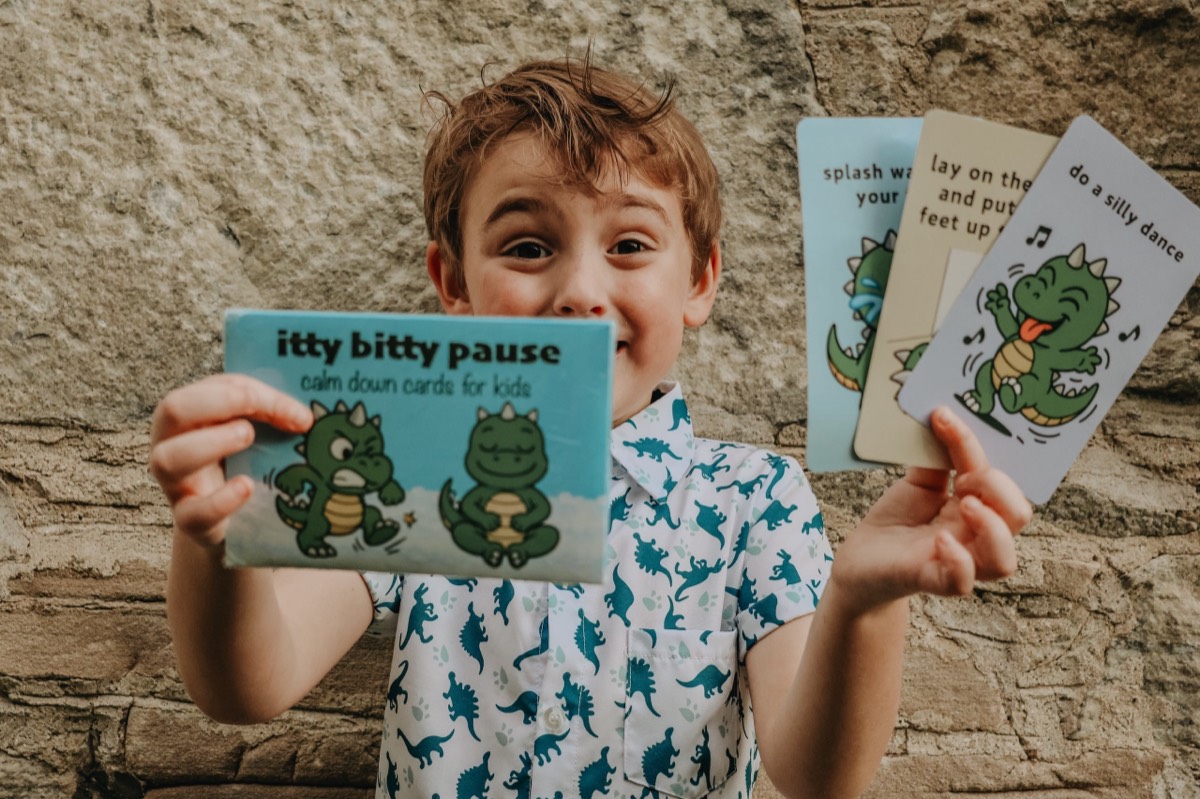
Our itty bitty pause card decks offer simple illustrated prompts for breathing, movement and imagination—more little things to try together at home or on the go.
Meet the calm cards